Floral Spine Anatomy: A Designer's Real-World Review
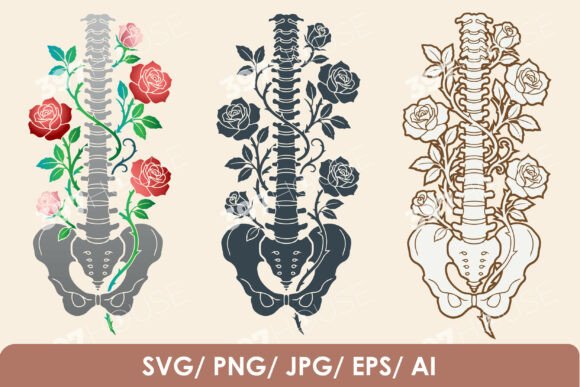
When I first opened the Floral Spine Anatomy bundle, my initial reaction was a mix of intrigue and caution. As someone who has spent years evaluating embroidery files for everything from boutique clothing lines to personalized baby gifts, I know that a striking image doesn't always translate well into thread. This design features a beautifully detailed human spine and pelvic bone entwined with delicate, romantic roses. It is a bold statement piece that sits somewhere between gothic elegance and soft romance. But does it work as a practical machine embroidery design? After running several test stitches and considering its potential in real commercial projects, here is my honest assessment.
The First Impression: Mood and Visual Personality
The Floral Spine Anatomy illustration carries a distinct narrative weight. Unlike generic floral patterns or simple monograms, this Graphics asset tells a story about resilience, fragility, and the beauty found in structure. The layout naturally draws the eye along the curve of the spine, where the roses seem to bloom directly from the vertebrae. For an embroidery project, this creates a strong focal point that demands attention.
In terms of visual appeal, the contrast between the skeletal structure and the organic flowers offers excellent opportunities for color storytelling. You could emphasize the starkness of the bones with white or silver threads while using deep burgundies or dusty pinks for the roses. However, the detail level requires careful consideration. The "romantic" aspect of the roses suggests softer, flowing stitches, while the anatomy implies precision. If executed correctly, this design elevates a standard handmade product into something that feels like high-end art.
Real-World Application: From Sketch to Stitch
To truly understand how Floral Spine Anatomy performs, we have to look at specific use cases. Imagine you are an Etsy seller preparing a collection of custom apparel for a client who loves alternative fashion. You decide to place this design on the back of a heavy cotton sweatshirt. The vertical orientation of the spine works perfectly there, creating a dramatic silhouette that flatters the wearer.
Consider another scenario: a small business owner crafting a line of kitchen towels for a boutique wedding gift. The juxtaposition of the pelvis and roses adds a sophisticated, slightly edgy touch to a traditional home item. In this context, the design becomes more than just decoration; it acts as a conversation starter. When customers see a finished product featuring Floral Spine Anatomy, they perceive a higher level of craftsmanship and artistic intent. This boosts customer trust and increases the perceived value of your small shop product.
For those looking to create an embroidered patch, this design offers a unique shape that stands out against the typical circular or square patches found in craft fairs. The intricate details of the bones and petals can be rendered beautifully in a medium-sized hoop, provided the stitch density is managed well. Whether you are making a tote bag design for a festival or a sweatshirt embroidery piece for a holiday gift, the versatility of this file is evident.
Navigating Technical Challenges and Fabric Choices
While the concept is strong, the execution requires technical savvy. Not every fabric plays nice with complex anatomical illustrations. I would advise extreme caution when attempting this design on stretchy fabrics like jersey knit without proper stabilization. The tension required to hold the fine lines of the spine together might cause the fabric to pucker, ruining the stitch clarity.
Texture is another critical factor. On a rough, textured fabric like a heavy canvas tote, the delicate rose petals might get lost in the weave. Conversely, on a smooth, tightly woven linen or a crisp cotton poplin, the running stitch and satin details will shine. Dark fabrics present a specific challenge; if the background is black, you must ensure the thread colors used for the spine offer enough contrast to be visible without looking muddy. Testing on scrap fabric first is not just a recommendation; it is a necessity.
Small hoop sizes are particularly risky for this file. The pelvic bone area contains fine curves that might become indistinct if the design is scaled down too much. If you need a smaller version for a cap or a baby onesie, you may find that the stitch density becomes too tight, leading to puckering or a loss of definition in the floral elements. Always check the recommended hoop size before committing to a final product.
Impact on Brand Consistency and Commercial Viability
For the creative entrepreneur, consistency is key. Using a design like Floral Spine Anatomy helps establish a brand identity that is both edgy and refined. It signals to your audience that you are not just mass-producing items but curating designs with depth. When used in digital embroidery file previews or printable mockups, the high quality of the illustration translates well, helping to drive engagement and sales.
However, commercial viability depends on licensing. Before selling finished items featuring this embroidery file, you must confirm the terms of use. Does the license allow for unlimited production? Are there restrictions on digital resale? These questions are vital for protecting your craft business. If the design is intended for personal use only, incorporating it into a product line could lead to legal issues. Always review the documentation provided with the download.
Practical Notes for the Embroidery Designer
If you are ready to integrate Floral Spine Anatomy into your workflow, keep these practical tips in mind to ensure a successful outcome:
- Stabilizer Selection: Given the detailed nature of the spine and bones, a cut-away stabilizer is often better than tear-away to prevent distortion over time, especially on garments that will be washed frequently.
- Thread Color Contrast: Experiment with metallic threads for the bone structure to add dimension, but pair them with matte threads for the roses to maintain the romantic feel.
- Density Checks: Inspect the fill stitches closely. If the design feels too dense, consider reducing the stitch count or adjusting the underlay to prevent needle breakage and fabric damage.
- Mockup Testing: Create black and white mockups to visualize the contrast before cutting fabric. This helps identify areas where the design might lose definition.
- Licensing Verification: Double-check whether you are purchasing a license for personal use, a single commercial item, or a broader commercial package. This is crucial for apparel decorators and digital product sellers.
Ultimately, Floral Spine Anatomy is a powerful tool for designers willing to put in the prep work. It transforms a standard embroidery project into a piece of wearable art. Whether you are creating a holiday embroidery gift, a custom apparel piece for a boutique, or a unique apron for a chef, this design offers a level of sophistication that resonates with modern aesthetics. Just remember to respect the technical limitations of the medium, choose your fabrics wisely, and always prioritize the integrity of the stitching. When done right, the result is a finished product that commands respect and admiration.